


The Renaissance Renaissance Is Here
The Renaissance Renaissance Is Here

Amanda RossThu, October 22, 2026 at 1:00 PM UTC
0
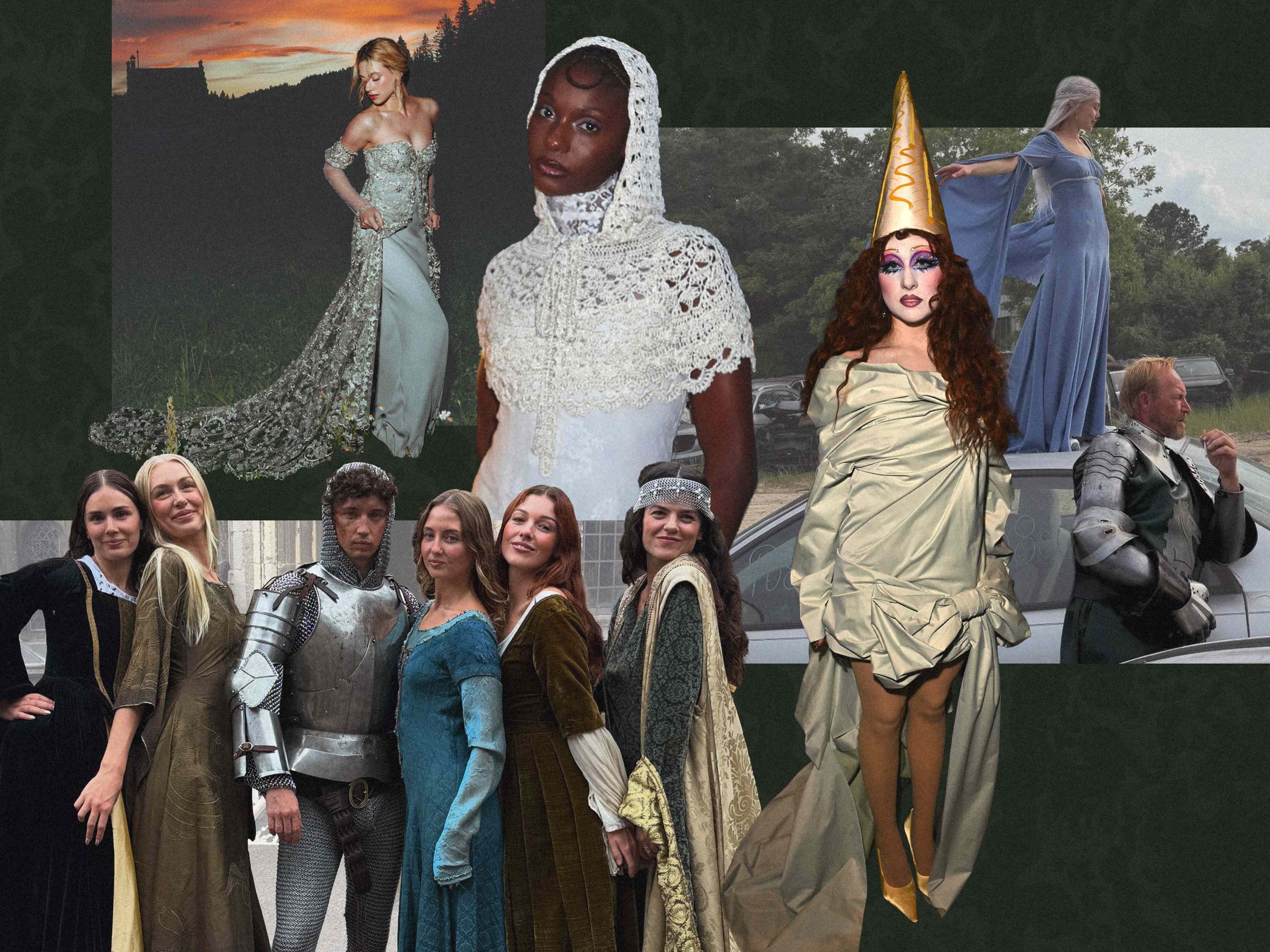
Credit: Getty Images / @phoebebridgers / @troyesivan / @lilireinhart/ @camrihewie / Instagram / Byrdie
Hear ye, hear ye. A new collective cultural hyperfixation is sweeping through mass media, but it’s not exactly new—in fact, it’s one of the most romanticized periods in human history. There appears to be a Renaissance period renaissance happening right now, with medieval motifs, courtly aesthetics, and old-world extravagance cropping up everywhere from fashion and music to film and television. Is this ye olde resurgence simply the result of the trend cycle circling back (waaaay back) to yesteryear, or is there something more psychologically revealing beneath all that velvet and chain mail?
Credit: @troyesivan/Instagram
First, a note for the history nerds. Yes, while the Renaissance and medieval periods overlapped for roughly 200 years, they are distinct eras. But if you’ve ever been to a restaurant with live jousting or attended a Ren Faire, you’ll know that most people collectively collapse them into one and the same. That definitely applies to our pop culture consciousness as well—and you might as well throw fairies, dragons, and Middle-earth into the mix, too. Brittany Broski’s Royal Court talk show is a great example. It’s explicitly inspired by the comedienne’s love for all things medieval, but there’s plenty of Renaissance-y, Tudor-era opulence, with a healthy dose of fantasy mixed in. Even Harry Styles turned up in a pair of prosthetic elf ears straight out of Mirkwood for his interview.
The Trend
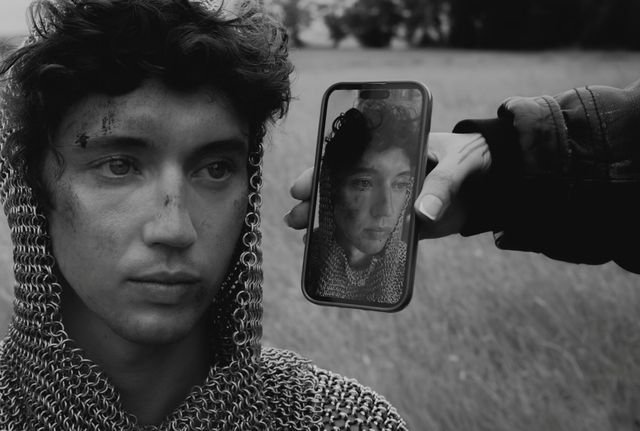
Styles is far from the only modern musician with his sights set on that bygone era. Troye Sivan’s music video for his recent single “Party” features the pop star in Crusades-style chain mail, quite literally slaying, before celebrating victory with what’s basically a medieval rave – while Gandalf himself narrates the whole thing. Chappell Roan also paid homage to the Middle Ages with her now-legendary Joan of Arc-inspired performance at the 2024 VMAs, complete with a full suit of armor and a flaming crossbow. At the 2025 Grammys, she accepted the Best New Artist award in a marigold-yellow hennin—that’s the pointy, ribboned princess hat — designed by Piers Atkinson. She’s pulled plenty of softer Renaissance references over the years, too, with her penchant for corsets, puffed sleeves, and flowing skirts. Phoebe Bridgers has also recently tapped into the time period with her video for “Lost Boys,” fittingly directed by Ren Faire director Lance Oppenheim, which features a cast of knights and Bridgers as a vaping elf princess.
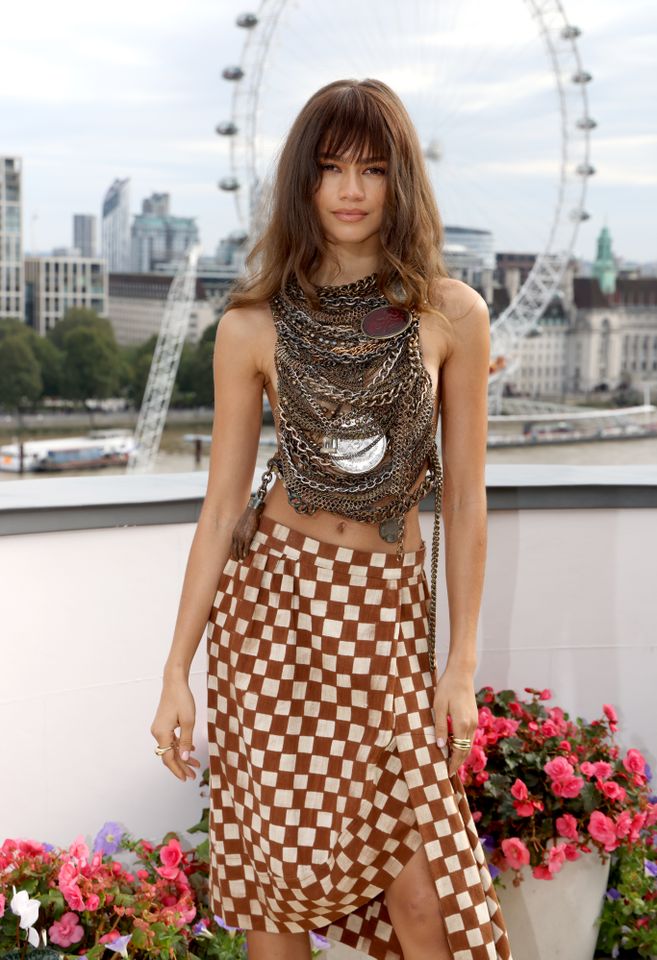
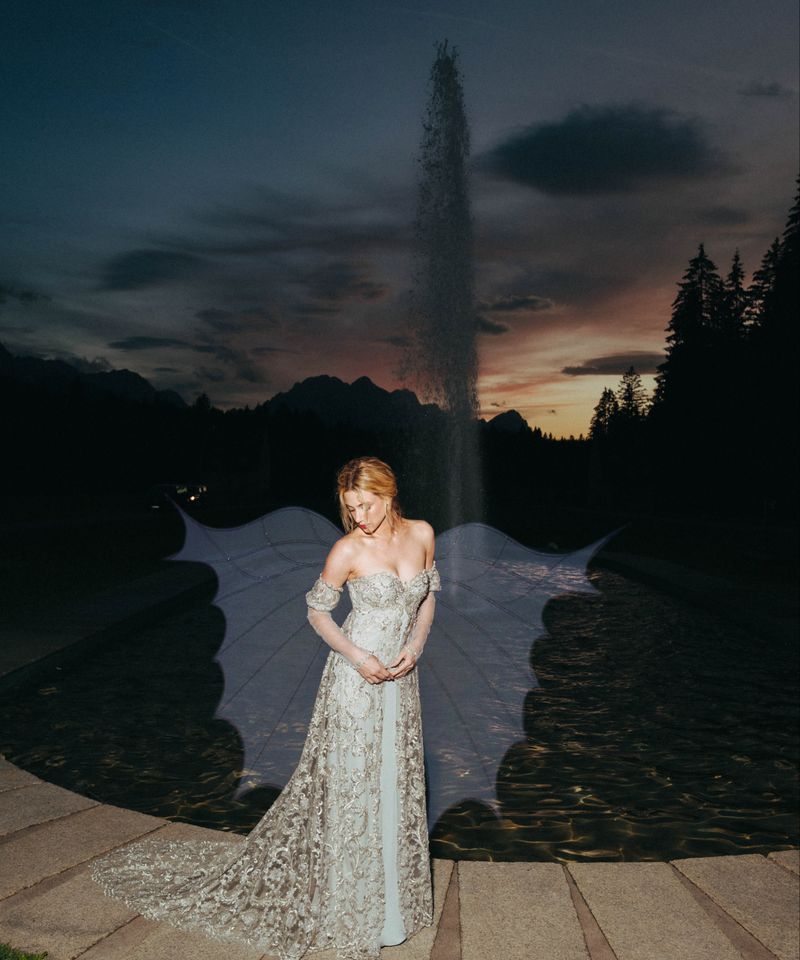
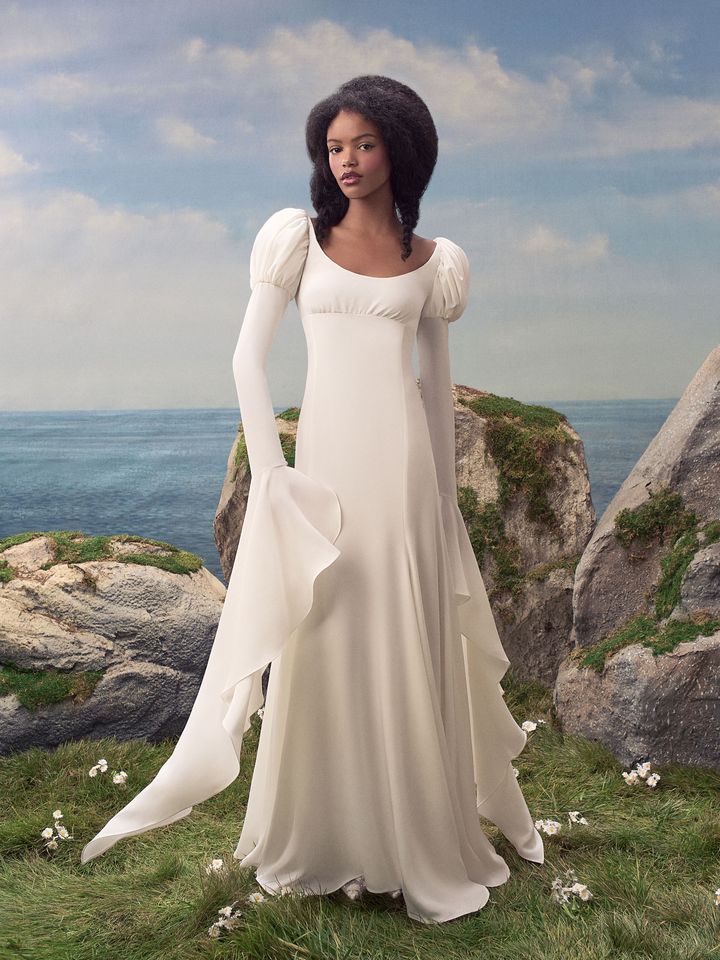
For her endless run of romcom homages while promoting The Love Hypothesis, Lili Reinhart wore a custom Rodarte gown inspired by Drew Barrymore in ever after, which was in step with the brand’s similarly medieval SS/27 collection. Elsewhere, Millie Bobby Brown and Zendaya have embraced chain mail on the red carpet, designers like McQueen and Givenchy have sent armor-inspired looks down the runway, and Burberry even trotted out an actual knight at its Fall 2025 show. Apparently, dressing for battle is back in fashion—it only took about 600 years.
Credit: Getty Images
Interestingly, this is one trend that seems to have been adopted by both celebrities and civilians simultaneously rather than the usual sort of trickle-down trajectory. There are viral TikToks about having drunken Girls Night Outs at Medieval Times restaurants (complete with costumes, naturally), while the Texas Renaissance Festival – the nation’s largest ren faire – drew a record 533,356 visitors in 2024. According to Travis Bryant, the fest’s Director of Business Development and Strategic Partnerships, more patrons than ever are dressing up in costume. And that all doesn’t even take into account the runaway popularity of the romantasy genre, an entire ecosystem of best-selling books that blend hardboiled fantasy with a touch of historical realism and a ton of sex. Game of Thrones and its adjacent properties continue to dominate HBO, while three separate Tolkien projects are all in various stages of completion.
Advertisement
Why the Renaissance is Having a Renaissance
The question remains, though: Why are we, at this particular moment, so eager for a gateway to the past? Could it be as simple as a longing for escapism? It’s worth noting that this is hardly the first time we’ve collectively gone medieval. In the late ‘60s and ‘70s, Tolkien fever swept through the counterculture, with Led Zeppelin famously working references to Mordor, Gollum, and the Misty Mountains into their music. The ‘80s gave us a veritable feast of sword-and-sorcery fantasy, from Excalibur and Legend to The Princess Bride and Willow. Then, in the early aughts, Hollywood went all in again with A Knight’s Tale, The Lord of the Rings, Shrek, and Ella Enchanted—which probably had some sort of impact on your childhood imagination.
Credit: @lilireinhart/Instagram
It’s hard not to notice that these waves of medieval and fantasy nostalgia tend to surface during moments of cultural unease. But this particular revival has a slightly different flavor: it’s considerably more camp, far sexier, and, perhaps most importantly, much of it features a distinctly feminine perspective. The knights are still there, yeah, but it’s the princesses and tavern wenches who are having considerably more fun (and if Trisha Paytas virally welcoming weary travelers into her medieval tavern is any indication, we’ve officially reached peak wench). You can also see it in the proliferation of corset-inspired going-out tops, square necklines, intricate updos, and romantic, billowing sleeves—historical court dress reimagined for a night at the bar instead of a royal banquet. There’s a certain appeal to borrowing the corsets, castles, and courtly romance of a bygone era while leaving its less-than-charming attitudes toward women firmly in the past.
Because indeed, our collective yearning for a simpler time tends to conveniently overlook the fact that life in the Middle Ages was, by most measures, pretty terrible. But that’s kind of the point, according to Dr. Rachel Goldman, licensed psychologist and author of When Life Happens. “We’re not necessarily longing for the past as it actually was—we are often longing for how we imagine it might have felt,” she explains. “Sometimes what we’re really seeking isn’t a different time period, but a different feeling, whether that’s simplicity, connection, or a break from the demands of everyday life.”
And the more centuries separating us from the chamber pots and bubonic plague, the easier it becomes to forget about them. That’s what makes this era so alluring as opposed to, say, the 2010s. “The further removed we are from a particular time period, the easier it may be to romanticize it,” Goldman adds. “We don’t have firsthand memories of the everyday challenges, so we can focus on the parts that feel more appealing, beautiful, and exciting.” As our world becomes increasingly digitized and siloed, too, the allure of more immersive experiences deepens. “One thing that sets a Renaissance festival apart from other forms of themed entertainment is that people not only can see a magical world, they can become part of it through the wearing of costumes and assume their own characters that will interact with our performers,” Bryant adds.
Credit: @rodarte/Instagram
With this latest Renaissance/medieval revival, the historical inaccuracy is part of the fun. We’ve cobbled together a version of the very distant past that never actually existed, where Joan of Arc rubs elbows with Tolkien’s elves, the tavern wenches have AirWraps, and everybody gets to play out their version of a fairytale. Nobody is exactly itching for a history lesson about chamber pots and torture racks—the only thing anyone’s really trying to resurrect is the aesthetic. And big ole turkey legs.
on Byrdie
Source: “AOL Entertainment”
